
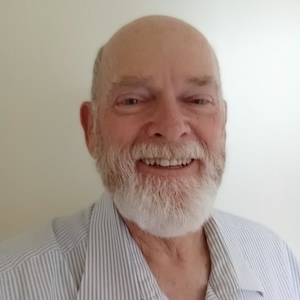
Leon Rowley
Leon is the fourth of six siblings and was raised in Utah, where he began learning construction early from his father, a builder of houses, churches, and schools. His father often took his sons to work with him when they were not in school. He first gave them tasks such as sweeping and clean-up, then taught them carpentry, concrete forming and finishing, roofing, and other skills.
In his youth, Leon learned music, including piano and guitar, and enjoyed sports. He played Little League baseball like many boys, loved basketball and tennis, and participated in scouting. He was careful not to let “all the fun stuff” interfere with his goal of excelling academically. He finished high school a year early and won a General Construction scholarship to Utah Technical College at Provo (UTC later moved to Orem and is now UVU).
At Utah Tech, instructors noted that Leon already had basic building experience and named him crew chief, even though he was the youngest member of his team for a project building a custom home from start to finish during his second year of study. After graduating in May, he left immediately on a two-year mission for The Church of Jesus Christ of Latter-day Saints, serving in the Chile Santiago North Mission. The mission president took advantage of Leon’s construction experience by having him repair and shore up the dangerously sagging terracotta roof of an older rental house where members of the town of Melipilla met for worship.
After his mission, Leon married Becky Francom and soon formed Leon-Lewis Construction as a self-employed partnership, building houses. For his own family, he has built and lived in three ICF-structured homes, a couple of modular homes, and the typical stick-built type. When the economic recession slowed residential construction in 1980, his skills, including Spanish proficiency, led to an invitation to work for the Church while living in Guatemala, then Panama, the Dominican Republic, and eventually eight different countries as the Church proceeded with building rural chapels “by the dozens.”
In both Central and South America, he oversaw various types of projects while traveling from home-based offices into ten other adjoining countries, applying a variety of localized construction methods and often innovating to use only locally available materials. In time, directors at Church headquarters asked, “Would you like to have a temple project?” Leon’s response was a resounding “Yes.” By the time he retired in 2018, he had been privileged to manage a dozen such projects in locations throughout both Latin America and the USA.
Email: rowleylkr@gmail.com